Blog · Web development
Auth0 or Keycloak: Which SSO Solution for Your Application?
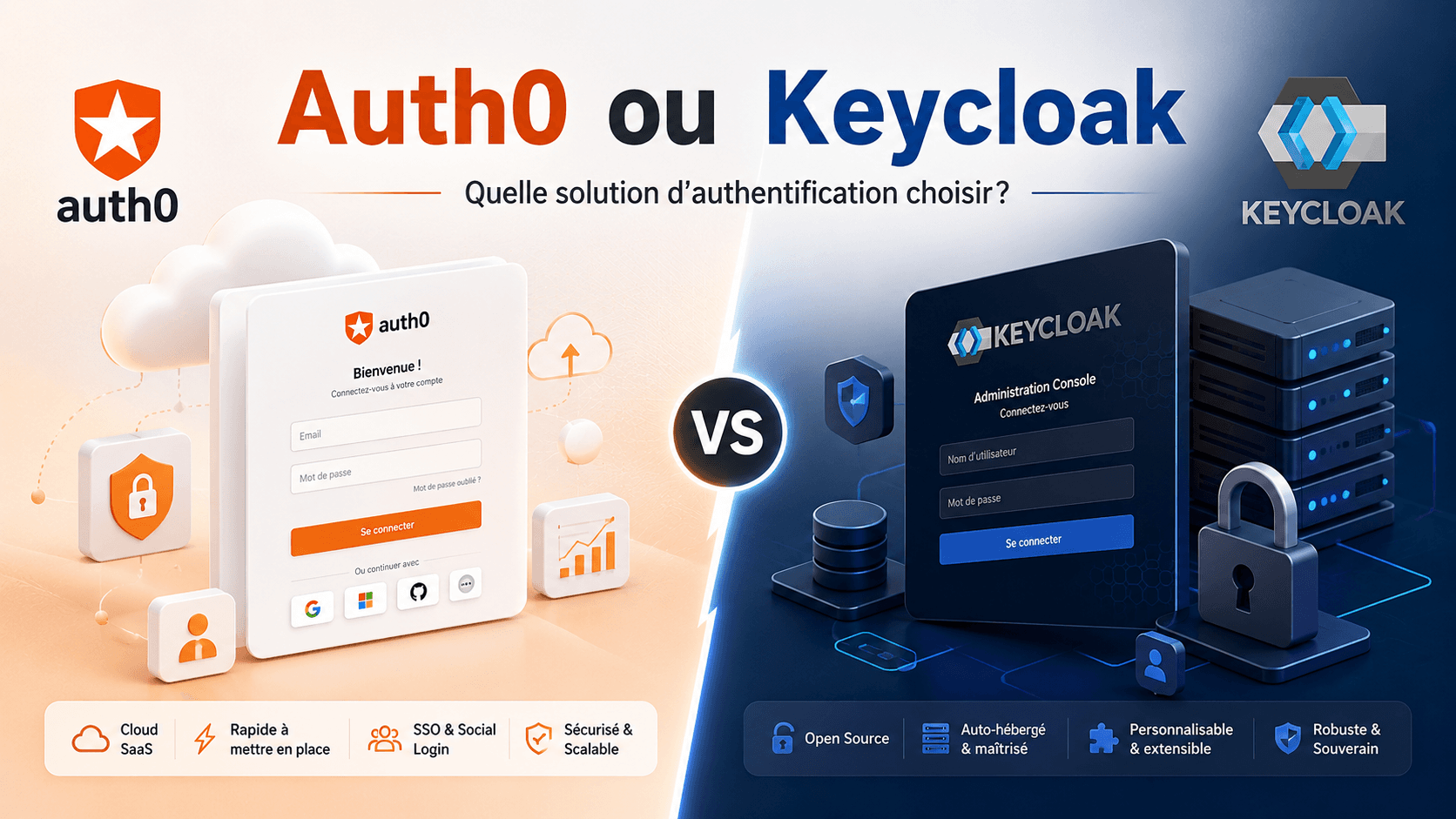
Auth0 (managed and fast), Keycloak (open source and sovereign), Supabase Auth (built-in). How to choose your authentication layer.
Any serious application needs authentication: login, role management, sometimes enterprise SSO. Three options stand out—Auth0, Keycloak, and your database’s built-in solution. The choice hinges on sovereignty and operational effort.
Auth0: Managed, Quick to Integrate
Auth0 is a turnkey authentication service: social login, SSO, MFA, user management—no servers to maintain. It integrates quickly, is robust, and covers complex enterprise needs (SAML, OIDC). The trade-off: a paid SaaS that scales with active users, and your identities reside with a third-party US provider.
Keycloak: Open Source and Sovereign
Keycloak does broadly the same—SSO, identity federation, SAML, OIDC, fine-grained roles—but it isopen source and self-hostable. Your identities stay on your infrastructure. This is the choice for sovereignty, at the cost of an additional component to maintain (updates, high availability).
And Supabase Auth?
For many applications, the built-in authentication ofSupabase (JWT, roles via RLS, multiple providers) is enough, without adding either Auth0 or Keycloak. We default to it on our projects—seeAgence Supabase.
How to Choose
- Supabase Auth for most applications: integrated, simple, sufficient.
- Auth0 if you want managed, rich enterprise SSO needs, without strong sovereignty constraints.
- Keycloak whenever identities must stay in-house (sovereignty, sensitive sectors).
The right choice is made during scoping, based on your existing SSO context—a topic we address in ourapplication development and SaaS.
Need help deciding on authentication or SSO? Let’s discuss.