
Blog · Web development
How to draft the specifications for your website?
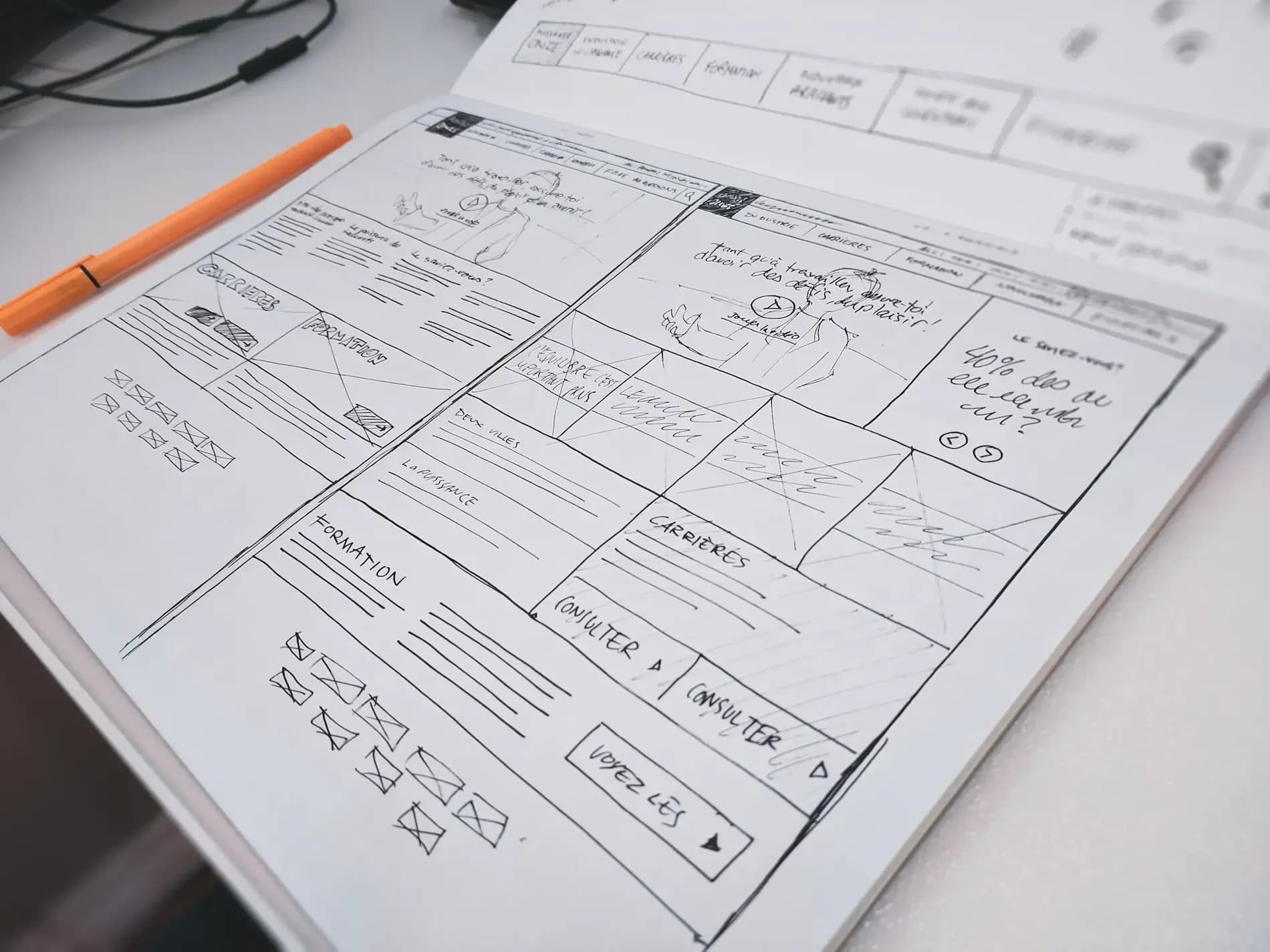
What is a website specification document and how to draft it? Scroll tells you everything
If you're building your website for the first time, or looking to improve its design, it's important to start by creating a specification document. By following the advice in this article, you'll be able to draft an effective specification document that will help you create a high-performing, appealing website for your target audience.
What is a website specification document?
Definition of the specification document
A website specification document is a document that outlines the specifications and requirements for designing, building, and implementing a website. It is a detailed document that defines all the features, content, design, and technical characteristics of the website. The purpose of the specification document is to provide a clear roadmap for creating your website.
Why is it important to have a website specification document?
The website specification document is important for several reasons. First, it helps clarify the goals and requirements of your website. By drafting a detailed specification document, you can better understand the needs of your target audience, as well as the features and characteristics your website must include to meet those needs.
The specification document is also important for the development process. It serves as a reference document for the development team, providing them with all the information they need to create the website. This ensures that all team members are working in the same direction and that all important details have been considered.
Finally, the website specification document is essential for communication between the development team and you. It serves as a contractual document that specifies the obligations of each party, ensuring that expectations are clear and that deadlines and budgets are respected.
Key elements of a website specification document
The key elements of a website specification document typically include the website's goals, target audience, features and characteristics, content, design, technical specifications, security and confidentiality requirements, as well as budget and deadlines. It is important to detail each section as much as possible to avoid misunderstandings and errors.
Step 1: Define your website's goals in the specification document
The first step in drafting a website specification document is to clearly define your website's goals. These goals will serve as the foundation for the design and development of your website, and they must be clear, achievable, and aligned with your overall strategy.
There are several categories of website goals, including lead generation, increasing online sales, improving brand visibility, providing information to your customers, creating an online community, etc. It is important to take the time to carefully examine your goals and categorize them into one or more of these categories to determine priorities.
It is also essential to keep in mind that goals can evolve over time, depending on changes in your business and market. Therefore, it is important to regularly revisit your goals and adjust them accordingly to ensure that your website remains aligned with your overall strategy.
Step 2: Analyze your target audience for the specification document
The step of analyzing your target audience is crucial when drafting your website specification document. Indeed, the success of your website largely depends on your ability to understand the needs, preferences, and behaviors of your target audience.
To define your target audience, you can use various methods such as surveys, individual interviews, demographic data analysis, or market trend observation. The goal is to create a precise profile of your target audience by identifying the most relevant market segments.
You can then use this information to establish the specifications for your website. For example, if you know that your target audience is primarily young adults, you might include social media features and sharing options to facilitate the distribution of your content. If your target audience is primarily older individuals, you might adjust the font and text size for easier reading.
By understanding the needs and expectations of your target audience, you can create a website that perfectly suits them, which will increase their satisfaction and maximize conversions.
Step 3: Establish the technical specifications in your website specification document
Once you have defined your website's goals and analyzed your target audience, it's time to move on to establishing the technical specifications for your website. The technical specifications of your website largely depend on the type of website you want to create and the features you want to integrate.
The different types of websites and their technical specifications
There are several types of websites, each with its own technical specifications. For example, an e-commerce site will require online payment features and inventory management, while a blog site will focus more on content publishing.
How to choose a website development platform
Choosing a website development platform is also crucial when establishing technical specifications. Website development platforms such as Webflow, WordPress, etc., have unique features and advantages. Therefore, it is important to conduct thorough research to determine which one will best suit your needs.
Basic technical specifications for a website
Regarding the basic technical specifications for a website, it is important to consider elements such as loading speed, compatibility with different browsers and devices, security, and ease of use.
Step 4: Define your website's content in your specification document
Content creation is one of the most important aspects of your website. Content is what attracts and engages visitors, and it is also what helps you rank on search engines. Therefore, it is essential to clearly define the types of content you want to present on your website in the specification document.
The types of content vary depending on the nature of your business and your website's goals. Commonly used content types include: blog articles, videos, images, infographics, customer testimonials, FAQs, product pages, service pages, etc.
Step 5: Plan your website's design and layout
Now that you have established the technical specifications and content for your website, it's time to plan its design and layout. This step is crucial as it determines the appearance of your website and the user experience it offers.
Design and layout elements to consider for your website
First, you should consider basic design elements such as layout, colors, fonts, and images. Your choice of these elements should be consistent with your brand and target audience. Colors, fonts, and images should be carefully selected to reflect your brand identity and create a pleasant user experience.
How to design an effective website architecture
Next, you need to design an effective website architecture. This involves deciding how to organize your content on each page so that it is easily accessible to your website visitors. It is important to ensure that each page is structured consistently and is easy to navigate.
Once you have defined the design and layout elements of your website, you can create mockups to visualize the final appearance of your website. This will allow you to see what your website will look like before it is even developed, and make adjustments if necessary.
Step 6: Finalize by defining the budget and timeline for your website project
Defining the budget and timeline is a crucial step to ensure the success of your website project. To establish a realistic budget, you need to consider all the costs associated with developing your website. This may include design, development, hosting, maintenance, and marketing expenses.
To estimate the development costs of your website, you can request quotes from specialized agencies or make a rough estimate based on your specific needs. It is important to note that the cost of developing a website can vary significantly depending on the features, design complexity, chosen development platform, and other factors.
Once you have established your budget, you need to plan a realistic timeline for your website project. This involves setting deadlines for each step of the development process, from design to launch. It is important to account for potential delays and obstacles that may arise during the development process.
Create your website with Scroll agency!
Do you want to create a website or revamp an existing one? Turn to Scroll agency! Whether your specification document is finalized or still being drafted, our agency supports you in developing your website on the Webflow platform. Thanks to our agence Webflow, we develop professional and ultra-high-performance websites with you. If you have a project, don't hesitate to contact us!