
Blog · Web development
How much does SaaS development cost today?
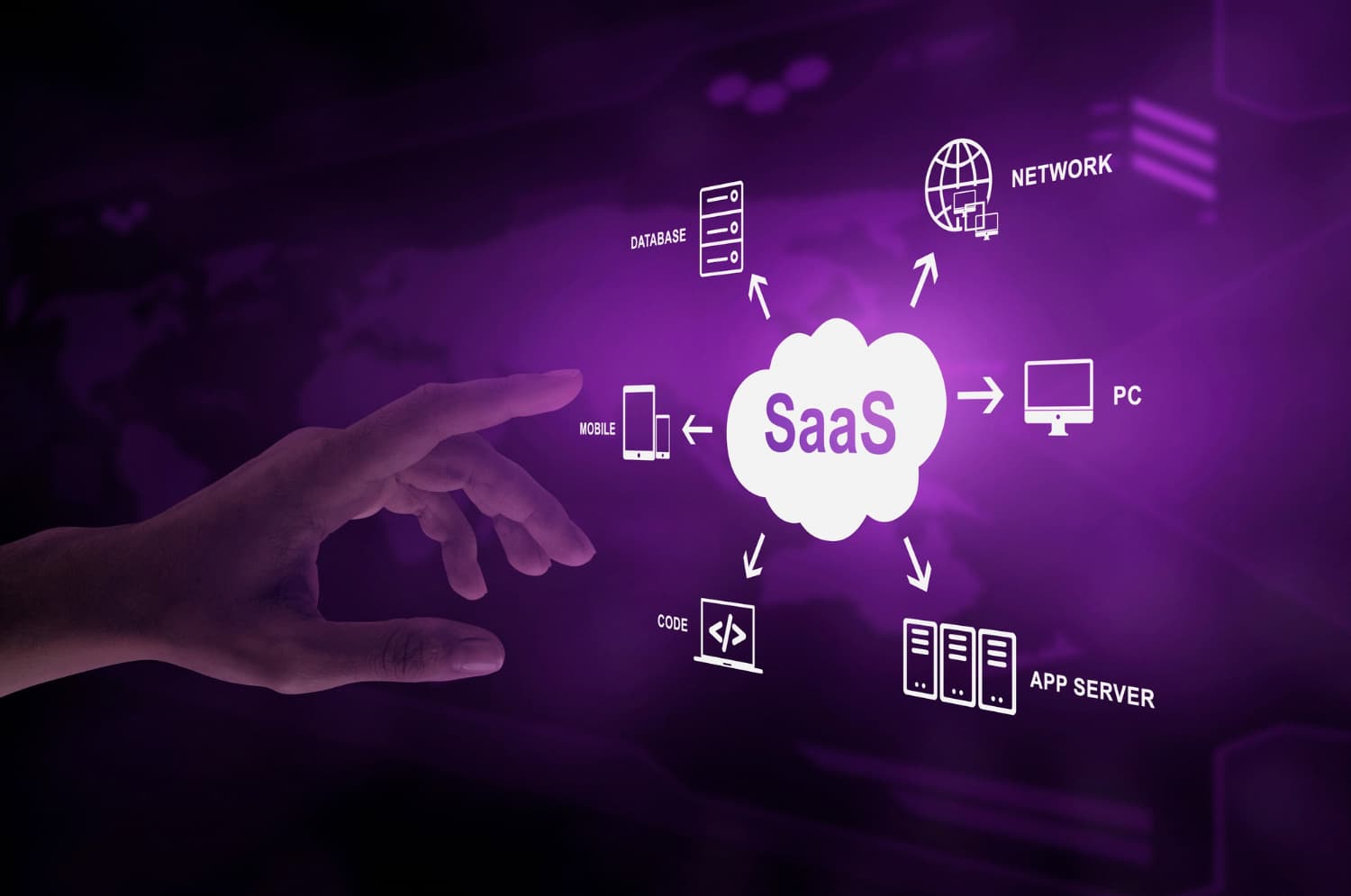
What is the cost of developing a SaaS today? Discover the real cost drivers, the budget for a SaaS MVP, the monthly costs, and the tools to plan for.
Creating a SaaS appeals to many entrepreneurs, SMEs, and project leaders. The idea seems straightforward: identify a need, design a product, launch it online, and charge a subscription. Yet, as soon as execution begins, one question always arises: how much does SaaS development cost today?
The honest answer is that SaaS development costs can vary widely. A simple project may remain affordable, while a more ambitious business product can require a much larger budget. Above all, the cost of creating a SaaS is never just a few days of development—it also includes scoping, design, infrastructure, third-party tools, maintenance, and sometimes AI-related expenses.
This is precisely what makes the topic so interesting. Many founders look for a quick figure, but in reality, it’s more about understanding the logic behind SaaS budgeting. This perspective helps avoid a product that’s too expensive, too slow to launch, or too complex to scale.
In this article, we’ll explore the real price ranges, the often-overlooked monthly costs, the small pricing details to anticipate for tools like Claude or Supabase, and, most importantly, what truly impacts a project’s budget. The goal isn’t to provide a vague estimate—it’s to help you see clearly before investing.
Why SaaS pricing varies so much
When it comes to custom SaaS development, there’s no one-size-fits-all price. Two projects may seem similar on paper yet have vastly different budgets.
The first factor is the functional scope. A small SaaS tool with a few screens, basic user authentication, and simple logic bears no resemblance to a full-fledged platform managing multiple roles, subscriptions, dashboards, automations, and external integrations.
The second factor is the depth of business logic. Some tools are easy to model, while others require dense business logic, complex rules, specific processing, and many edge cases. This is often where SaaS development costs rise faster than expected.
The third factor is the chosen approach. A project launched without precise scoping almost always ends up costing more. Conversely, a well-designed SaaS from the start can launch faster, with a better ROI and a more controlled budget.
Finally, the expected level of polish matters. A SaaS MVP doesn’t cost the same as a highly refined product built to scale quickly. The more customization you want, the higher the web application development cost.
Budget ranges for building a SaaS
To provide a concrete overview, the market can be divided into several tiers.
A simple mini SaaS, with few screens, minimal automation, and light business logic, often falls between 8,000 and 15,000 euros. This type of SaaS budget typically applies to well-scoped projects with a first version focused strictly on the essentials.
A serious SaaS MVP, capable of being showcased, sold, and tested under proper conditions, typically ranges between €15,000 and €30,000. This is the most realistic range for many B2B projects or internal tools. We’re talking about a genuine launch-ready product, not just an enhanced mockup.
A more comprehensive business SaaS, with multiple workspaces, a subscription model, user roles, a back-office, automations, and third-party integrations, can range from €30,000 and above.
For a complex SaaS, highly specific or heavily customised, the budget can climb much higher. This is often the case when combining security constraints, heavy architecture, scalability needs, complex workflows, and advanced AI layers.
The key takeaway is that an SaaS MVP price only makes sense relative to a clear objective. Spending less doesn’t always mean investing better. The right budget is the one that allows you to launch a credible version, learn quickly, and avoid rebuilding the entire product six months later.
What you’re really paying for in an SaaS project
The cost of SaaS development isn’t just about building a few screens. In a well-run project, you’re paying for several distinct blocks of work.
The first block is scoping. You need to clarify the need, prioritise features, define the MVP, and avoid scope creep. This step is often underestimated, yet it saves a lot of money down the line.
The second block is product design. This covers user experience, user journeys, interface logic, action prioritisation, and overall clarity. A SaaS that appears simple to use often requires a lot of upfront work.
The third block is pure development. It includes the interface, database, roles, authentication, permissions, business logic, payments, forms, dashboards, and admin features.
The fourth block is infrastructure. You need hosting, security, backups, email delivery, external tool integrations, log monitoring, and stability oversight.
The fifth block is post-launch. SaaS maintenance costs are part of the real budget. A product must be fixed, updated, and improved. This isn’t optional—it’s a normal part of the SaaS lifecycle.
The often-overlooked monthly costs
This is the most common mistake. Many project owners focus on the initial development cost, only to later discover recurring expenses. Yet a SaaS operates every month. So you must factor in SaaS hosting costs and ancillary tools in the overall calculation.
Let’s take a simple example. Even for a lightweight version, you often need to account for a database, front-end hosting, transactional emails, sometimes file storage, an analytics service, a payment system, and monitoring tools.
This can be supplemented with components such as Supabase for the database and authentication, a deployment tool like Vercel, a transactional email solution, or automation and product tracking tools. Individually, the mini-pricing seems reasonable. Together, they form a significant budget line.
This becomes even clearer when you add an AI layer. The cost of AI APIs then depends on usage volume, the chosen model, and call frequency. A SaaS with AI can remain profitable, but only if this aspect is considered from the outset.
The right approach, therefore, isn’t to look for the cheapest tool at each step. The right approach is to build a coherent system with predictable costs and room for growth.
How much does a SaaS with AI cost
The topic is gaining prominence, and two scenarios need to be distinguished.
First, you add lightweight AI to the product. For example, content generation, summarisation, suggestions, categorisation, a simple assistant, or data analysis. In this case, the implementation cost often remains reasonable if the scope is well-defined.
Second, you want a fully embedded AI logic at the core of the product. Here, the requirements are more demanding. You need to consider prompts, data flows, safeguards, user experience, output errors, supervision, and sometimes context storage. It’s no longer just a feature—it’s a product layer in its own right.
This is why the cost of a SaaS with AI depends so much on actual usage. A lightweight integration of Claude or another model can remain highly controlled. However, a product that multiplies API calls, automations, and complex scenarios can see its operating costs rise quickly.
In other words, AI doesn’t necessarily blow up the budget. What does is poorly scoped, poorly integrated AI, or AI used without a clear business logic.
What drives SaaS budget up or down
A SaaS budget is never fixed. It depends on several decisions.
The first lever is the precision of the brief. The clearer it is, the more reliable the estimate. A vague project almost always costs more than a well-defined one.
The second lever is the scope of the MVP. Many project owners want to include everything in version 1. This is the fastest way to drive up the bill. A good SaaS MVP focuses on the core value.
The third lever is the choice of stack. Depending on the need, a low-code, no-code, or hybrid approach can significantly reduce the SaaS MVP cost without blocking future evolution.
The fourth lever is the level of customisation required. The more bespoke everything is, the higher the production cost.
The fifth lever is the quality of project management. A well-managed project moves faster, avoids unnecessary back-and-forth, and limits costly mistakes.
In short, it’s not just the technology that determines the cost—it’s also the methodology.
Should you work with an agency, a freelancer, or an in-house team?
This is a very common question when looking to build a SaaS.
An in-house team is a good option if you already have strong product maturity, a recurring budget, and the need to build for the long term. Otherwise, it often requires a significant investment too early.
A freelancer can work well for a well-defined scope. But you need to be able to manage the project, frame the product, prioritise requests, and maintain technical and business consistency.
A SaaS development agency often becomes the best solution when you need to move fast, properly frame the project, and turn an idea into a real product without losing focus. The challenge isn’t just to build—it’s to make the right choices from the start.
That’s where an offering like application development makes sense. The goal isn’t just to write or assemble code. The goal is to design a useful, coherent, scalable, and profitable product. Along the same lines, an AI integration for businesses is particularly relevant when the AI layer needs to be seriously considered and tied to a concrete business challenge.
What to prepare before requesting a quote
Before even comparing quotes, you need to establish a few fundamentals.
First, describe the problem to solve—not a list of features. A real business problem or a genuine user need.
Next, identify what absolutely must be in the first version. That’s the core of the product. Everything else can come later.
Then, clarify the business model. What subscription, which target audience, what promise, what margin level, what sales assumptions. Without this, it’s very hard to assess whether the SaaS budget is realistic.
Finally, be clear about what comes next. A SaaS isn’t a project you “finish.” It’s a product you launch, then improve. This mindset completely changes how you think about web application development costs.
Move faster with the right development approach
The best way to reduce SaaS development costs isn’t to cut corners everywhere. It’s to frame the project better and choose the right method.
On many projects, an overly heavy approach slows everything down. Conversely, well-structured development—with the right tools and the right level of customisation—can deliver a solid version faster. This approach often strikes the best balance between speed, quality, and budget.
For businesses looking to turn an idea into a tangible product, it’s often more effective to adopt a smart launch strategy rather than aiming for an overly ambitious vision from the start. This allows you to release a marketable first version, gather real-world feedback, and then decide on the most profitable next steps.
This is also what separates projects that launch from those that remain in planning for months.
What to keep in mind before getting started
How much does SaaS development cost today? The real answer is that a simple project can start at a few thousand euros, a serious SaaS MVP often requires a more structured budget, and a more ambitious business product can quickly climb much higher.
The key point isn’t just the price. It’s the consistency between scope, methodology, monthly costs, and business objectives. A good SaaS isn’t necessarily the one developed at the lowest cost. It’s the one launched with a coherent level of investment, a sound architecture, and a clear return-on-investment logic.
When the project also involves automation, AI, or internal tool modernisation, it becomes even more valuable to be supported with a structured approach. This is exactly where Scroll can add value, both inapplication development to build a solid product, and inenterprise AI support to frame the right use cases and avoid unnecessary early expenses.
Frequently asked questions
What is the average cost of developing a SaaS?
The average cost depends on the scope. For a serious SaaS MVP, we often see budgets between €8,000 and €25,000. A simpler project may cost less. A more comprehensive business SaaS can go well beyond this range.
What budget should you plan to create a SaaS?
The SaaS budget must include framework, design, development, infrastructure, and maintenance. You also need to plan for monthly costs such as hosting, emails, external APIs, and sometimes AI.
What are the monthly costs of a SaaS?
Monthly costs often include hosting, database, email sending, storage, analytics tools, payment tools, and maintenance. If the product integrates AI, you also need to add AI API costs.
Related articles