
Blog · Web development
Creating a professional website: 7 key elements
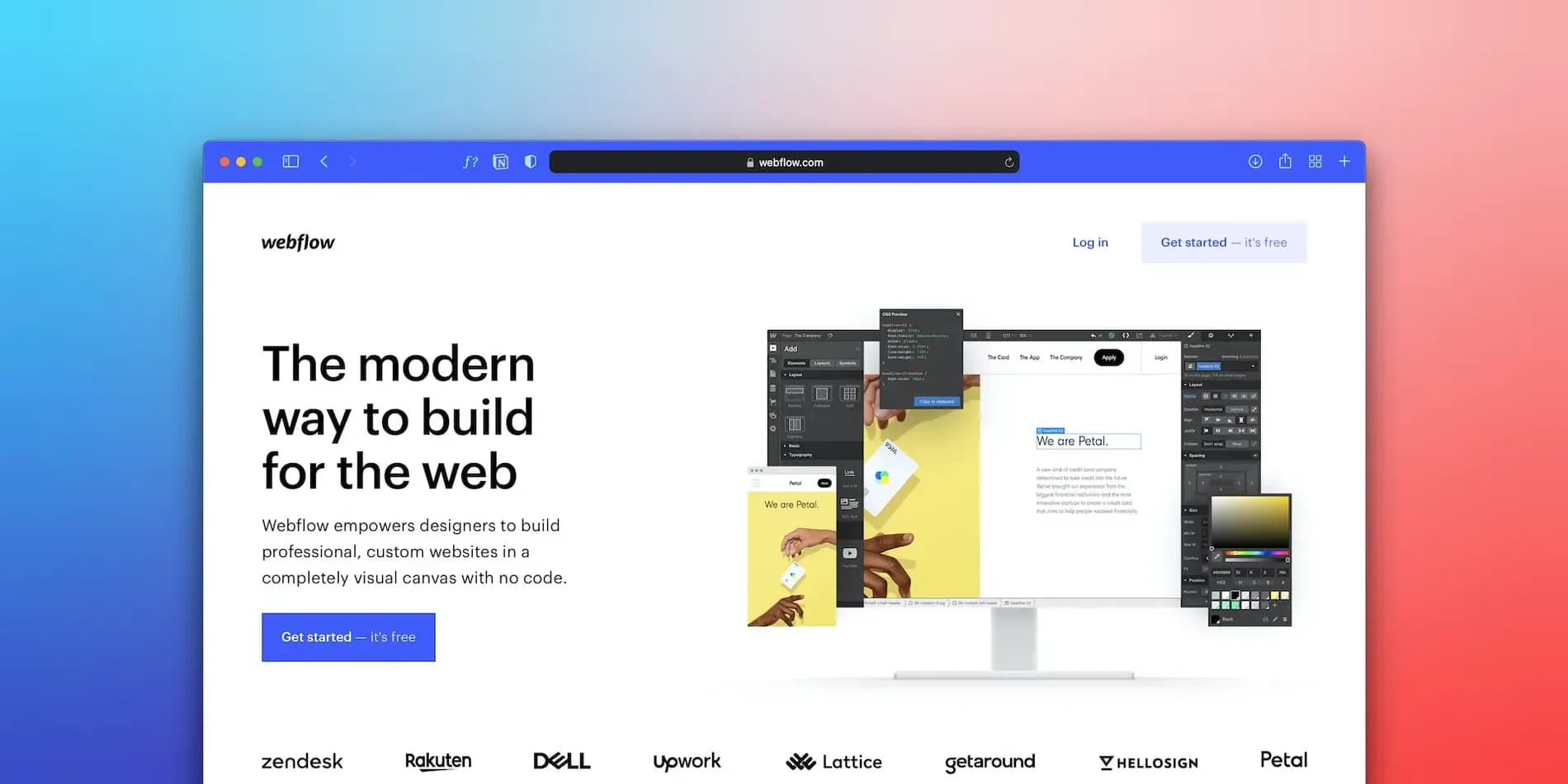
How do you create a professional website? What are the essential elements to consider? Scroll tells you everything
When deciding to create a professional website, it’s crucial to consider multiple aspects to ensure your site meets the expectations of your clients and users. Whether you’re a small business, a freelancer, or simply someone looking to establish a professional online presence, building a website may seem daunting—but it’s well worth the effort. A professional website can help you achieve your goals, whether that’s increasing visibility, expanding your audience, or generating online sales.
1 - Define your goals and target audience
When creating a professional website, the first step is to define your goals and target audience. This is essential to ensure your site meets visitor expectations and aligns with the image you want to project for your business or brand.
Why is it important to define your goals and target audience?
Defining your goals and target audience is key to building a website that meets your audience’s needs. By understanding their expectations and motivations, you can create a site that provides the information they’re looking for, engages them, and encourages action—whether that’s filling out a contact form or making an online purchase.
Additionally, defining your goals and target audience helps you create a website that aligns with the image you want for your business or brand. By clearly identifying your objectives, you can shape your communication strategy and content to achieve your business and marketing goals.
How do you define your goals and target audience?
To define your goals, ask yourself the right questions: What do you want to achieve with your website? Do you want to increase online visibility, generate leads, or sell products or services online? Answering these questions will help you clearly define your goals and implement the necessary actions to reach them.
To define your target audience, you need to understand their characteristics, needs, and motivations. You can use various techniques: surveys, market research, polls, or analyzing data from your current visitors. By defining your target audience, you can create a website that addresses their specific needs, improving user experience and increasing conversion chances.
2 - Choose a domain name and hosting for your website
Selecting a domain name and hosting provider is a critical step in creating a professional website. The domain name is the address that allows users to access your site, while the hosting provider stores your website on a server, making it accessible online.
What is a domain name and hosting provider?
A domain name is the unique address that allows users to access your website on the web. It consists of a name (which can be your brand or business name) and an extension (.com, .fr, .net, etc.). Choosing a domain name requires careful thought to ensure it aligns with your brand image.
A hosting provider is the service that stores your website on a server, making it accessible online. There are several types of hosting (shared, dedicated, VPS, cloud, etc.), depending on your needs and budget. Choosing the right hosting provider is important as it impacts your website’s loading speed, uptime, and security.
How do you choose a domain name and hosting provider for a professional website?
Choosing a domain name and hosting provider should be done carefully, based on your needs and budget. Here are some key criteria to consider:
Choosing a domain name:
Simplicity: Your domain name should be easy to remember and type.
Relevance: Your domain name should align with your brand image and business.
Extension: Choose a popular and geographically appropriate extension (.com, .fr, etc.).
Availability: Ensure the domain name you want is available.
Choosing a hosting provider:
Uptime: Ensure the provider guarantees over 99.9% uptime for your website.
Security: Choose a provider that ensures website security, offering SSL certificates and regular backups.
Speed: Ensure the provider offers fast servers for optimal loading times.
Support: Opt for a provider with efficient and available technical support in case of issues.
3 - Design an optimal architecture and navigation for professional use
The architecture and navigation of a professional website play a crucial role in how visitors interact with your content. A well-thought-out structure makes it easier for users to navigate your site and quickly find the information they need. An optimized architecture can also improve your site’s natural search engine ranking.
To design an optimal architecture and navigation for your professional website, start by identifying your users’ needs and expectations. Then, structure your site’s content accordingly, ensuring each page has a clear purpose and that visitors can easily find the information they’re looking for.
4 - Create a professional and cohesive design
The design of a professional website is one of the key elements in capturing visitors’ interest and trust. A professional and cohesive design reflects your brand image and leaves a positive impression on visitors.
To create a professional and cohesive design for your website, start by defining your brand guidelines. This includes selecting colors, fonts, and images that reflect your brand’s visual identity. You can also incorporate elements from your logo and integrate them harmoniously into your design.
Another important aspect of a professional and cohesive design is the layout. Organize your site’s elements in a way that is visually appealing and easy to navigate. Visitors should be able to find the information they need without having to sift through multiple pages.
Finally, ensure your design is compatible with all platforms visitors may use to access your site. A professional website should be accessible on desktops, tablets, and smartphones, and easy to navigate across all devices.
5 - Write high-quality professional content
When it comes to a professional website, content is one of the most important elements to consider. It’s the content that allows you to communicate with your visitors, convincing them to stay on your site, return, and even convert into customers. High-quality content is therefore essential for a successful professional website.
To write high-quality content, it’s important to understand your target audience and their expectations and needs. It’s also crucial to structure your content clearly and coherently, with headings and subheadings that make it easy to read and understand. Use short, simple sentences to make your content easy to digest.
As for the content itself, it’s important to provide useful and relevant information to your target audience. You can use statistics and concrete examples to strengthen your arguments and add credibility to your content. Don’t forget to adapt your tone and writing style to your target audience.
Finally, to improve your natural search engine ranking, you can incorporate relevant keywords into your content—but be careful not to overdo it. Content should first and foremost be written for your visitors, not for search engines. If you provide high-quality content, search engines will reward you with better rankings.
6 - Optimize natural search engine ranking (SEO)
Natural search engine optimization, or SEO (Search Engine Optimization), refers to the set of techniques used to improve a website’s ranking in search engine results. It’s essential for any professional website as it helps attract qualified traffic and potential customers.
To optimize the natural search engine ranking of a professional website, several elements must be considered. First, it’s important to conduct keyword research relevant to your site’s content and professional activity. These keywords should then be strategically integrated into titles, texts, meta tags, images, etc.
Next, it’s crucial to optimize your site’s structure and performance. This includes using a clear architecture, clean and lightweight code, smooth navigation, fast loading times, and compatibility with different devices and browsers.
Finally, obtaining high-quality external links to your site, also known as "link building," is an important part of natural search engine optimization. These links help strengthen your site’s authority and credibility in the eyes of search engines, which can improve its ranking in search results. However, it’s important to prioritize quality over quantity, obtaining links from reliable and relevant websites related to your professional activity.
7 - Ensure website security and reliability
Security and reliability are essential aspects of a professional website to guarantee user trust and the site’s longevity. Cyberattacks can lead to significant financial losses, damage your company’s reputation, and compromise users’ personal data.
To ensure the security and reliability of a professional website, it’s recommended to follow best security practices, such as regularly updating the site and its components, securing access, using an SSL certificate, and implementing a backup solution.
It’s also important to choose a reliable and secure hosting provider that offers advanced security features and efficient technical support in case of issues.
Finally, the reliability of a professional website can be ensured by monitoring site performance, implementing emergency recovery measures, and regularly testing to ensure the site functions correctly and that users can access the information they need.
Create a professional website with Scroll agency
At Scroll, we develop ultra-high-quality professional websites for you and with you, incorporating all the key points mentioned in this article. Thanks to our Webflow agency, you get a website that’s beautifully designed, high-performing, reliable, secure, and well-optimized for search engines!
Our experts create solutions that perfectly meet your expectations. If you have a project, don’t hesitate to contact us!
For a site your team can update independently, consider a professional website built on a custom CMS.