Blog · AI
What is an LLM? Understand everything in 3 minutes

Discover what an LLM is, how a Large Language Model works, and its practical applications. Understand it all in 3 minutes, with no technical jargon.
You’ve read "LLM" ten times this week without really knowing what it means. Don’t panic: in 3 minutes, you’ll understand what’s behind these three letters that are transforming every industry.
LLM: simple definition of a Large Language Model
An LLM, or Large Language Model, is an artificial intelligence program trained to understand and generate text. In French, we call them *grands modèles de langage*. In practice, an LLM can read a question, grasp its meaning, and formulate a coherent response—just like a human would. Except it does so in seconds and at scale.
These language models rely on deep learning, an advanced branch of machine learning. They’ve been trained on billions of pages of text: books, articles, websites, forums, technical documentation. The result? A system capable of text generation, text analysis, machine translation, summarization, and many other natural language processing tasks.
Natural language processing, or NLP, is the field of artificial intelligence that focuses on enabling machines to understand human language. LLM are its latest generation. They weren’t programmed with manual grammar rules. Instead, they learned to write by observing massive amounts of text. That’s what makes them so versatile and impressive.
Key takeaways : an LLM is a large language model, meaning a large language model based on deep learning. It can understand, analyze, and generate text in virtually any context.
How does an LLM work? A jargon-free explanation
Understanding how an LLM works doesn’t require a PhD in computer science. You just need to grasp three fundamental building blocks: the architecture that powers it, how it processes text, and the training method that makes it performant.
The Transformer architecture: the engine behind LLM
It all started in 2017, when Google researchers published a now-legendary paper: *"Attention is All You Need."* They introduced the transformer architecture, a new type of neural network designed specifically for natural language processing.
Before transformers, language models read text word by word, in sequence. This was slow and inefficient for understanding the context of long sentences. The transformer architecture changed the game with a key concept: the attention mechanism.
The attention mechanism allows the model to analyze all the words in a sentence in parallel. Even better, thanks to self-attention, each word "looks" at all the other words to understand its own role in the sentence. Take the sentence *"The river bank was steep."* The word *"bank"* doesn’t mean the same as in *"I opened a bank account."* Self-attention is what enables the model to make this distinction by analyzing the surrounding words.
This capability revolutionized NLP. All major language models today—whether GPT, Claude, Gemini, or Mistral—are built on this transformer architecture. Without it, none of the AI tools you use today would exist in their current form.
Tokenization, pre-training, and fine-tuning: the three key steps
An LLM doesn’t read words. It reads tokens. Tokenization is the process of breaking raw text into small units that the model can process. For example, the word *"incredibly"* might be split into *"incredible"* and *"ly."* This step is essential: it determines how the model understands and produces text.
Once tokenization is in place, training an LLM happens in several phases. Here are the three main ones:
- Pre-training : the model ingests massive volumes of training data. It learns to predict the next word in a sentence, over and over, across billions of examples. This is the most computationally expensive phase. It gives the LLM its general knowledge and language mastery. Machine learning does the heavy lifting here.
- Fine-tuning: once pre-training is complete, the model is fine-tuned on more specific data. For example, an LLM can be specialized in code generation, legal fields, or customer service. Fine-tuning makes the model more precise for a given use case without starting from scratch.
- Human alignment: this is the most recent and strategic step. Using a technique called RLHF (Reinforcement Learning from Human Feedback), humans evaluate the model’s responses and teach it to be more helpful, honest, and less harmful. Human alignment is what sets a raw LLM apart from a reliable assistant like those used in businesses.
Each of these steps relies on massive volumes of training data. The quality and diversity of this data directly impact the performance of the final model.
What are LLM use cases?
There’s a lot of talk about theory. But what most professionals care about is real-world application. So, concretely, what are the current use cases for LLMs?
Chatbots and conversational agents are the most visible application. Millions of people interact daily with ChatGPT, Claude, or Gemini to get answers, draft emails, prepare meetings, or explore ideas. In businesses, conversational agents handle customer support, lead qualification, and even new employee onboarding.
Text generation is another major field. LLMs write articles, marketing briefs, LinkedIn posts, product descriptions, and meeting summaries. A marketing manager who used to spend half a day writing a newsletter can now produce a first draft in minutes. The quality isn’t always perfect on the first try, but the productivity gain is real.
Code generation is transforming developers’ daily work. Tools like GitHub Copilot, powered by LLMs, suggest code in real time, detect bugs, and propose refactoring. Even non-technical profiles are starting to create scripts and automations thanks to large language models.
Machine translation has taken a spectacular leap. LLMs no longer translate word for word. They understand context, cultural nuances, and language registers. This is a huge asset for companies operating internationally and needing fast, reliable localization.
Text analysis enables the extraction of insights from large volumes of documents. Legal contracts, customer feedback, financial reports, internal surveys: LLMs can summarize, categorize, identify trends, and extract key points from thousands of pages in seconds.
And these are just the most common use cases. LLMs are also being used in scientific research, educational content creation, HR task automation, competitive intelligence, and strategic information synthesis.
Open-source LLMs vs. proprietary models: the current landscape
When it comes to LLMs, two major categories stand out: proprietary models on one side, and open-source LLMs on the other. Understanding this distinction is essential for making an informed choice.
Proprietary models dominating the market
OpenAI’s GPT models are the most well-known. They power ChatGPT and thousands of applications via API. Claude, developed by Anthropic, stands out for its reliability and ability to process long documents. Google DeepMind’s Gemini focuses on integration within the Google ecosystem. These proprietary models offer cutting-edge performance. However, they come with usage costs, vendor dependency, and opacity regarding the training data used.
Open-source LLMs gaining momentum
Facing the giants, an alternative is taking shape. Meta’s LLaMA, Mistral from the French startup Mistral AI, as well as Falcon and Qwen offer open, free, and modifiable language models. The appeal of open-source LLMs is threefold: full transparency in how the model works, the ability to fine-tune it on your own data, and data sovereignty since everything can run on your own servers.
To choose between open-source LLMs and proprietary models, four criteria matter. First, cost: proprietary models charge per use, while open-source LLMs require infrastructure. Second, customization: fine-tuning is much more accessible with open-source. Third, raw performance: proprietary models often maintain a lead, though the gap is closing fast. And finally, confidentiality: if your data is sensitive, an open-source LLM deployed internally is often the safer choice.
Advantages and limitations of LLMs: what you need to know before diving in
No technology is perfect. Large language models are no exception. Having a clear understanding of the advantages and limitations of LLMs is essential for using them intelligently.
What LLMs do remarkably well
The first advantage of LLMs, is the productivity gain. Any task involving text generation, text analysis, or information synthesis is now completed in a fraction of the time. A lawyer analyzing an 80-page contract, a marketer writing 10 email variants, a developer debugging a complex function: they all save hours every week.
Versatility is another major asset. A single LLM can handle dozens of different NLP tasks without needing a specialized model for each. Text generation, machine translation, classification, entity extraction, summarization, code generation: it all goes through the same system.
Accessibility is advancing as fast as the technology. APIs are easy to integrate, no-code interfaces are multiplying, and open-source LLMs allow small teams to deploy AI solutions without astronomical budgets. Fine-tuning makes these models adaptable to almost every industry and profession.
AI hallucinations, biases, and other blind spots
Let’s talk about the elephant in the room. AI hallucinations are the Achilles’ heel of LLMs. Large language models sometimes invent facts, cite non-existent sources, or provide completely false answers with unsettling confidence. This isn’t a one-off bug. It’s a structural feature of how these models generate text. They predict probable sequences, not truths. Verifying an LLM’s outputs remains essential, especially in high-stakes contexts.
LLM biases are another critical issue. Training data inevitably contains biases—social, cultural, gender-based, or geographical. The model absorbs and reproduces them in its responses. Human alignment mitigates the problem but doesn’t eliminate it entirely. Addressing LLM biases remains an ongoing challenge for all AI labs.
There’s also the energy and environmental cost. Training an LLM consumes massive amounts of energy and water. The limitations of LLMs aren’t just technical; they’re also ecological and ethical. And then there’s opacity: no one truly knows why an LLM produces one answer over another. This "black box" problem raises serious questions about accountability, particularly in healthcare, justice, or finance.
What LLMs will change in the next 12 months
We’re still at the beginning. As impressive as large language models are today, what’s coming will accelerate things even further.
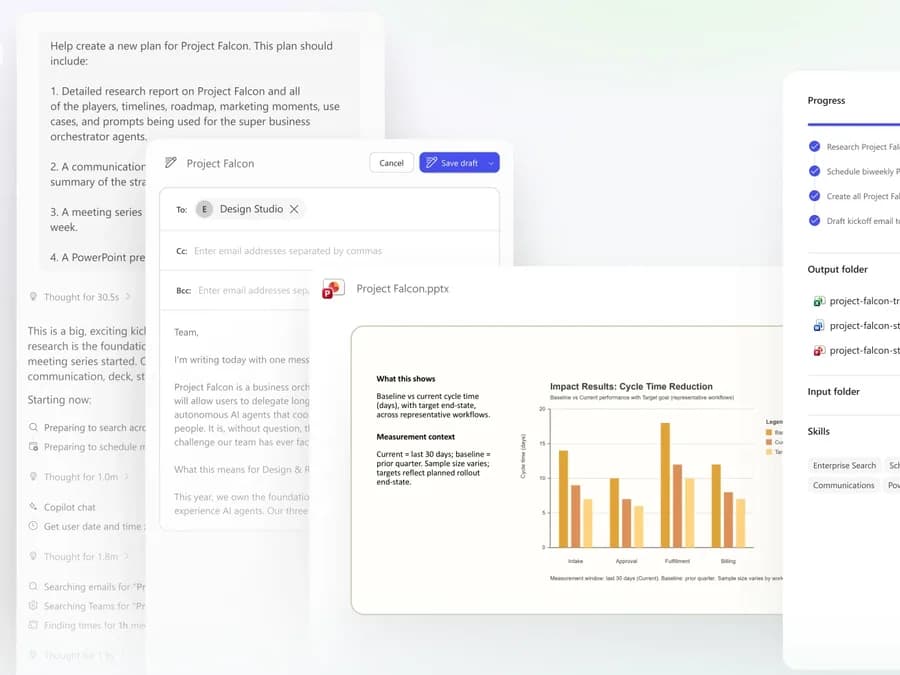
The first major trend is the rise of autonomous AI agents. Today, chatbots answer questions. Tomorrow, conversational agents will autonomously chain together complex tasks. Take a brief, research data, write a report, send it via email, and schedule a follow-up—all without human intervention between steps. We’re moving from passive language models to active artificial intelligence.
Sector-specific specialization of language models will also accelerate. We’re already seeing LLMs tailored for healthcare, legal, finance, or education. Fine-tuning on industry-specific data yields far superior results compared to a generalist model. This trend will make large language models accessible and relevant for businesses that once thought AI wasn’t for them.
The democratization of fine-tuning for SMEs is another game-changer. Until recently, fine-tuning an LLM required rare skills and significant budgets. Tools are simplifying. Costs are dropping. Companies with 20 employees will soon be able to deploy a specialized language model trained on their own data, hosted on their infrastructure, without relying on a US or Chinese provider.
The importance of human alignment will also grow with regulation. The EU AI Act is gradually coming into force. It imposes transparency, safety, and accountability standards on AI model providers. Companies integrating LLMs into their processes will need to justify the reliability of their systems. Human alignment is shifting from a nice-to-have to a must-have.
Finally, the convergence of LLMs and business tools will transform workflows. CRMs, ERPs, marketing tools, and project management platforms will natively embed language models. We’ll no longer talk about using a chatbot alongside a tool. The model will be inside the tool—invisible and high-performing.
So, how do you take action now?
You now understand what an LLM is, how it works, what it’s used for, and its strengths as well as its limitations. The real question is no longer "what is a large language model?" but "how do I integrate it into my business to gain a tangible advantage?"
That’s exactly what we do at Scroll. We help companies operationally integrate artificial intelligence: auditing use cases, selecting the right language model, deployment, and team training. No slides, no vague promises. Just concrete, tailored solutions with measurable results.
Want to know what an LLM can do for your business? Let’s talk.
To put an LLM to work on your data, we deploy an enterprise RAG connected to your content.
Frequently asked questions
What does LLM mean in artificial intelligence?
LLM stands for Large Language Model. It is an AI program trained on billions of texts using deep learning. An LLM can understand, analyze, and generate text autonomously. It relies on the transformer architecture and the attention mechanism to grasp the meaning and context of human language.
What is the difference between an open-source LLM and a proprietary model?
A proprietary model like GPT or Claude is developed and hosted by a company. Access is provided via API, at a usage cost. An open-source LLM like LLaMA or Mistral is free, modifiable, and can be deployed on your own servers. The choice depends on your customization needs, data confidentiality requirements, and infrastructure budget.
What are the main use cases for LLMs in business?
The most common use cases for LLMs include chatbots and conversational agents for customer support, text generation for marketing, code generation for technical teams, automatic translation for international expansion, and text analysis to extract insights from large documents. Fine-tuning also allows specializing an LLM for a specific industry.
Can LLMs make mistakes?
Yes. AI hallucinations are a known limitation of large language models. An LLM can produce false information or fabricate sources with an appearance of total certainty. It does not verify facts: it predicts probable word sequences. Biases inherited from training data can also skew responses. Human verification remains essential in any high-stakes context.
How does LLM training work?
LLM training occurs in three stages. Pre-training exposes the model to massive volumes of training data so it can learn the structure of language through machine learning. Fine-tuning then refines its skills for specific tasks or domains. Finally, human alignment uses evaluator feedback to make the model more reliable, useful, and less biased. Tokenization occurs upstream to break text into units the model can process.