Blog · Web development
Digital sovereignty: why SMEs can no longer leave this issue to the state
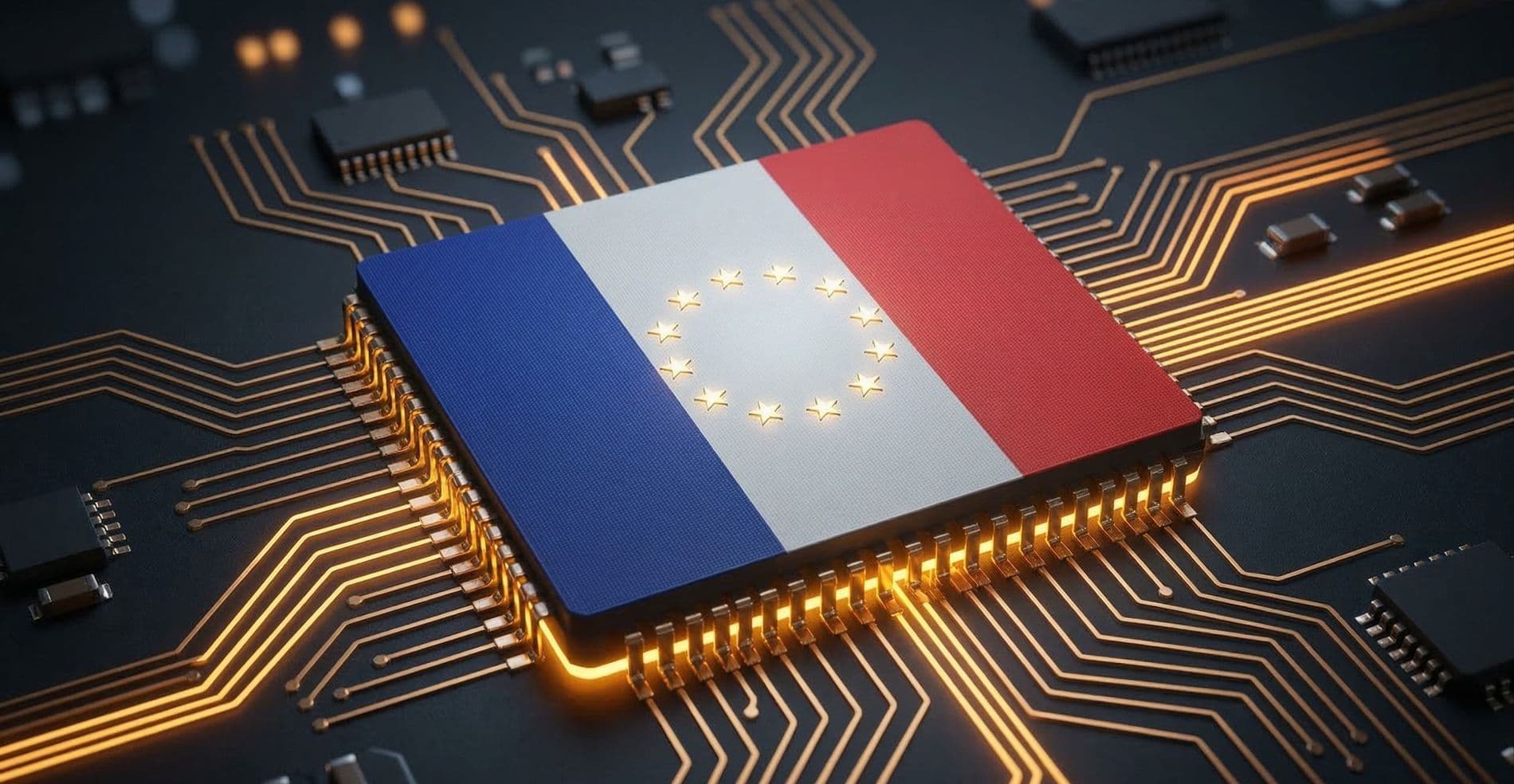
Digital sovereignty is becoming a business challenge for SMEs: data, sovereign cloud, compliance, cybersecurity, and tools to regain control of.
For a long time, digital sovereignty was treated as a distant issue. A topic for ministries, large sensitive groups, or cybersecurity experts. In many SMEs, the subject remained in the background. They chose efficient, easy-to-deploy tools that were comfortable for teams. And they moved forward.
The problem is that this comfort often created an invisible dependency.
Today, a company can entrust its email, documents, customer relations, automations, backups, and even part of its AI usage to services it doesn’t truly control, such as AI agents. The data may be hosted in Europe. The interface is smooth. The entry cost is low. But fundamentally, who controls the stack? Who sets the rules? Who guarantees reversibility? Who protects sensitive data in the event of legal, technical, or commercial disputes?
This is where digital sovereignty becomes a boardroom issue.
This isn’t an ideological stance. It’s not an anti-foreign tools obsession. It’s a matter of control, business continuity, GDPR compliance, cybersecurity, and technological independence. For an SME, the issue isn’t about rebuilding everything from scratch. The issue is knowing which critical components need to be brought back in-house, with what level of demand, and in what order.
In other words, the real question is no longer: should we talk about digital sovereignty?
The real question is: how many dependencies can your business still afford?
What does digital sovereignty actually mean?
Digital sovereignty refers to an organization’s ability to retain control over its tools, data, workflows, and critical dependencies.
This definition is important because it avoids a very common misunderstanding. No, digital sovereignty doesn’t necessarily mean self-hosting everything. No, it doesn’t mean banning all non-European services either. And no, it’s not just about servers or data centers.
In reality, digital sovereignty is built on several simple pillars.
The first is data sovereignty. A company must know where its data goes, who can access it, under what legal framework, and with what guarantees.
The second is the control of sovereign digital tools or, failing that, critical tools chosen with full awareness. A tool may be high-performing, but it can pose a significant risk if the company has no visibility into its subcontractors, no exit strategy, or no real control over data flows.
The third is cloud reversibility. An SME must be able to switch tools, retrieve its data, migrate its usage, and limit contractual or technical lock-ins.
The fourth is governance. A stack of tools is never sovereign by magic. It becomes so when the company knows what it uses, why it uses it, and how it frames usage.
Seen this way, digital sovereignty isn’t an abstract concept. It’s a level of mastery. And for an SME, this mastery becomes a real strategic lever.
Why this topic is becoming urgent for SMEs
A few years ago, many companies could postpone the issue without immediate consequences. That’s no longer the case.
First, dependencies have multiplied. A modern SME no longer relies on a single business software and an email inbox. It operates with a multitude of services: cloud, CRM, storage, collaborative tools, automation, e-signature, customer support, analytics, generative AI, no-code connectors, document management. Each component seems trivial. Together, they form a critical infrastructure.
Second, demands are rising. Customers want more guarantees. Partners want to know where data goes. Insurers, partner IT departments, and some clients ask more precise questions about security, data hosting in France, GDPR compliance, or subcontracting practices.
Finally, the cost of inaction is increasing. When a company realizes too late that a tool has become central, it loses negotiating power. It endures price changes. It accepts terms it would never have approved initially. And it sometimes discovers that exiting a critical service will take weeks, even months.
The real shift is here. Digital sovereignty is no longer a topic reserved for public actors. It’s becoming a resilience issue for SMEs that want to last.
Hosting in Europe, sovereign cloud, trusted cloud: beware of shortcuts
Many companies believe they’ve resolved the issue as soon as a provider announces hosting in Europe or France. That’s a first level of vigilance, but it’s not enough.
Hosting data in France alone doesn’t guarantee full sovereignty. You also need to examine the provider’s legal framework, subcontractors, access model, security guarantees, support policy, reversibility capacity, and transparency level.
That’s why the concepts of sovereign cloud, trusted cloud and SecNumCloud are gaining prominence in serious discussions.
For an SME, it’s not necessarily about aiming for the maximum level everywhere. That would often be disproportionate. However, it’s important to understand one simple point: the datacenter’s location doesn’t tell the whole story. Two tools may display European hosting while offering very different levels of control.
The right approach is to ask concrete questions:
Where are the data actually hosted?
Who operates the service?
Which subcontractors are involved?
What technical access exists?
Can data be easily exported?
Can you switch solutions without disrupting operations?
Is the tool suitable for sensitive data or only for non-critical use?
A mature company doesn’t choose a tool just because it claims to be sovereign. It chooses it because it has verified what it truly controls.
The real risk is silent dependency
Most SMEs don’t lose control overnight. They lose it gradually.
At first, a tool simplifies daily operations. Then it becomes central. Next, it connects to other services. Automations are created. Habits form. Strategic data accumulates. And one day, the company realizes it no longer knows how to switch.
This is what we call silent dependency.
It’s not always visible in a quick audit. It becomes apparent when you need to migrate a database, secure access, map workflows, organize AI tools, or explain to a sensitive client where information is processed.
This dependency has multiple costs.
First, there’s a financial cost. The more indispensable a tool becomes, the harder it is to challenge.
Then, there’s an operational cost. A failure, usage restriction, contractual change, or poor integration can impact a large part of the business.
There’s also a legal and reputational cost. If the company cannot clearly explain its processing chain, subcontractors, access levels, or hosting logic, it weakens its position with demanding clients.
Finally, there’s a strategic cost. A highly dependent company innovates less freely. It adapts its processes to its tools, rather than adapting its tools to its strategy.
Digital sovereignty, therefore, often begins with a simple realization: what seems seamless today may become very costly tomorrow.
Priority areas to regain control
Not all components carry the same weight. To avoid overly broad projects, an SME must first identify its critical areas.
1. Email and collaborative tools
This is often the core of daily operations. Emails, calendars, documents, video calls, file sharing, workspaces. These tools contain a large part of the company’s life. They hold commercial, HR, contractual, and sometimes confidential data.
If this layer is poorly chosen or misconfigured, the risk is immediate.
2. CRM and customer relationships
The CRM centralizes commercial memory. It contains customer data, opportunities, contracts, exchange histories, and sometimes sensitive data depending on the industry.
When this component becomes opaque or difficult to evolve, the entire sales machine loses flexibility.
3. Backups and storage
Many companies think they’re protected because they “have everything in the cloud.” In reality, a provider’s cloud is not a backup strategy in itself. A sovereign approach requires independent copies, controlled access, and a credible recovery plan.
4. Automations
This is a widely underestimated point. No-code workflows, connectors, and automations save a tremendous amount of time. But they can also create loss of control. Data flows from one tool to another without clear governance. Critical scenarios rely on poorly monitored accounts. Flows become indispensable without being documented.automatisations automations
A small or medium-sized business seeking digital sovereignty must therefore map its automations, not just its software.
5. AI usage
This is now a central issue. Many teams use AI to summarize, write, search, analyze, or produce faster. It’s useful. But without a framework, part of the business intelligence and internal data can end up in poorly chosen services.
Again, the goal isn’t to ban. The goal is to define which uses are acceptable, with which data, in which tools, and under which rules.
A realistic strategy to move forward without breaking everything
The biggest trap would be to turn digital sovereignty into a grand theoretical project. An SME doesn’t have the time or the interest in launching a total revolution if it can progress in a targeted way.
The right method boils down to a few simple steps.
First, you need to conduct a digital sovereignty audit. This audit must not be a decorative document. It must provide a clear view of the tools used, the data processed, critical dependencies, sensitive areas, subcontractors, and possible exit points.
Next, you need to classify components based on their level of criticality. Some can remain as they are in the short term. Others deserve rapid securing. Still others must be replaced or rearchitected.
Then comes the time for trade-offs. A credible strategy doesn’t dogmatically oppose convenience and sovereignty. It seeks the right level of control in the right place. An SME doesn’t need absolute purity. It needs a coherent architecture.
Finally, you need to implement a concrete roadmap. This can involve changing hosting, choosing sovereign digital tools for certain functions, better access separation, an independent backup policy, a flow mapping, or clearer governance of automations and AI.
The key point is progressiveness. A company moves forward better when it addresses real priorities, rather than trying to switch everything at once.
Digital sovereignty isn’t just about choosing the right tools
This is often where decisions go wrong.
Choosing a European, French, or supposedly sovereign tool is a useful step—but it’s only a step. Poor implementation can undo the benefits of the right tool. Overly open access, missing backups, undocumented workflows, or fragile automations can recreate dependency, even with a well-chosen stack.
Conversely, a well-designed hybrid architecture can already significantly improve a company’s control.
The real issue, then, isn’t just tool selection. It’s their deployment, governance, and integration into business processes.
This is precisely why many SMEs need a partner capable of connecting strategy, operations, automation, and security. Because between a good principle and a truly mastered stack, there’s very concrete implementation work to be done.
What leaders need to remember now
Digital sovereignty is moving from discourse to the operational reality of businesses. This shift is already affecting SMEs, even when they think they’re not concerned.
The issue isn’t giving in to fear. The issue is avoiding over-reliance on critical components that no one has properly assessed.
A solid company knows where its data is. It understands its dependencies. It controls its essential tools. It plans its exit before it’s needed. It sets its level of requirement based on its actual risks. And it accepts that by 2026, technological independence is part of performance.
From this perspective, digital sovereignty isn’t an added cost. It’s a more mature way to manage your IT system, AI usage, and automations.
For many SMEs, the right starting point isn’t replacing everything. It’s sorting, regaining visibility, and restoring control where it’s lacking. This is often when external support becomes valuable. At Scroll, this topic is addressed pragmatically: stack audits, tool selection, automations, AI usage framing, more sovereign architecture, and concrete deployment. Not to look good on a slide. To make the company more robust, more transparent, and freer in its decisions.
Frequently asked questions
Does digital sovereignty really concern SMEs?
Yes. SMEs often rely on a multitude of cloud services, collaborative tools, CRMs, automation solutions, and AI applications. Once these components become critical, the question of control becomes a genuine business issue.
Is hosting data in France sufficient?
No. Hosting is an important criterion, but you must also consider the legal framework, subcontractors, access rights, security guarantees, cloud reversibility, and the actual level of governance.
What is a sovereign cloud?
A cloud is considered sovereign when there is enhanced control over the infrastructure, data, access, and legal framework. In practice, you should always analyse the concrete guarantees rather than relying on marketing claims.
Which sovereign digital tools should be prioritised?
Start with the critical components: email, documents, storage, backups, CRM, automation, and AI applications. These are the elements that structure a company’s dependencies.