Blog · Web development
Proton: a real alternative to GAFAM for your data?
Can Proton replace Google or Microsoft for an SME? Mail, Drive, VPN, Pass, security, limitations, and a step-by-step method to migrate without losing efficiency.
For a long time, choosing digital tools seemed fairly straightforward.
For email, you’d pick Gmail or Outlook. For files, Google Drive, OneDrive, or Dropbox. For meetings, Google Meet or Teams. For passwords, a browser-integrated manager. For VPN, a separate tool. For AI, yet another solution.
This model has a clear advantage: everything works quickly, everything is familiar, and everything is already ingrained in team habits.
But it also comes at a cost. Not just a financial one. A cost in dependency, data confidentiality, access control, and sometimes digital sovereignty.
This is where Proton becomes compelling.
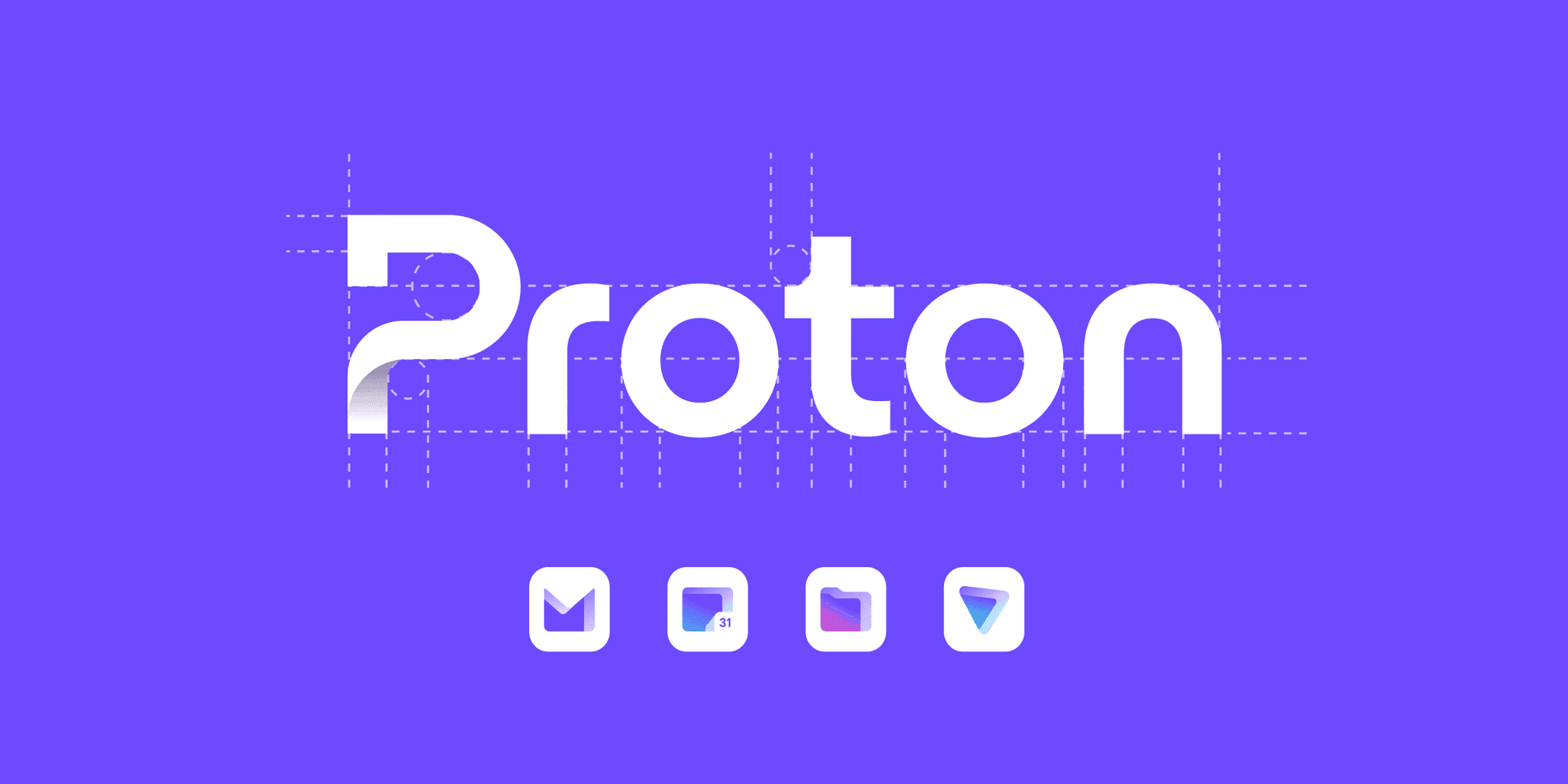
Proton is not just a secure email service. It’s a complete ecosystem that includes Proton Mail, Proton Calendar, Proton Drive, Proton Docs, Proton Sheets, Proton VPN, Proton Pass, Proton Meet, and Lumo, its privacy-focused AI assistant. Proton presents itself as an encrypted suite, based in Switzerland, with a data protection-first approach and an ad-free model.
So the real question isn’t: “Is Proton more ethical than Google?”
The real question is: “Can Proton become a credible alternative to the GAFAM for an SME without disrupting daily work?”
The short answer: yes, in many cases. But not without the right approach.
Why SMEs are looking for alternatives to the GAFAM
The GAFAM won because they made digital simple.
One account, one inbox, one calendar, one cloud, shared documents, video calls, efficient search. For an SME, it’s very tempting. You create the accounts, add collaborators, and the business runs.
The problem arises later.
When client files are scattered. When access rights are no longer clear. When a former employee retains permissions. When a sensitive document ends up in the wrong folder. When a team uses free tools without approval. When no one really knows where the company’s data is stored.
This is often when business leaders start considering GAFAM alternatives.
Not out of activism. Out of clarity.
An SME doesn’t need an alarmist narrative. It needs to know which tools truly protect its data, which ones simplify daily operations, and which ones create a dependency that’s hard to break.
This is exactly the topic of digital sovereignty for SMEs. And this is also why a sovereign stack should never be thought of as a trendy list of tools. It should be designed as a work system.
What exactly is Proton?
Proton is a Swiss company built around Proton Mail. Its positioning is straightforward: offer digital tools that better respect privacy, with strong encryption and a subscription-based business model rather than advertising. Proton states it was founded in 2014 by scientists who met at CERN and now claims over 100 million accounts created.
Initially, Proton was primarily known as an alternative to Gmail.
That is no longer the case.
Proton aims to become an alternative to Google Workspace and Microsoft 365 for teams seeking better data protection. Its business suite includes email, calendar, cloud storage, collaborative documents, video conferencing, VPN, password manager, and a private AI assistant.
This changes everything.
A company doesn’t replace Google or Microsoft with just one email service. It replaces them with a coherent suite. Or at least with several well-connected components.
Proton thus positions itself in an interesting space: simpler than a fully self-hosted open-source stack, more private than traditional GAFAM suites, but less universal than Google Workspace or Microsoft 365.
It’s a compromise. And for many SMEs, that’s exactly what’s needed.
Proton Mail: the most obvious alternative to Gmail
The first use case is Proton Mail.
For a business, email is often the most sensitive tool. It contains quotes, contracts, HR exchanges, invoices, client requests, banking information, temporary access, and confidential documents.
It’s also the most targeted tool.
Phishing, fake suppliers, fake invoices, password theft, account takeover: many security issues start with email.
Proton Mail offers a clear promise here: a secure, encrypted email service based in Switzerland, designed to limit third-party access to content. Proton highlights end-to-end encryption and “zero-access” encryption, meaning Proton cannot read certain user data without permission.
For an SME, the benefits are tangible.
You can use a professional domain name. You can create addresses for your teams. You can better protect sensitive exchanges. You can also reduce your dependence on Gmail or Outlook, especially if your business handles client, financial, legal, or strategic data.
Does this mean Proton Mail is perfect?
No.
Teams heavily accustomed to Gmail may find the ecosystem less fluid at first. Some business integrations may require some adjustments. And if your company already operates 100% within Google Workspace, with automations, scripts, shared documents, and advanced usage, the migration must be carefully prepared.
But to replace Gmail for secure email, Proton Mail is often the simplest entry point.
Proton Drive: an alternative to Google Drive, but with caveats
After email, the second topic is storage.
Google Drive, OneDrive, and Dropbox have become go-to solutions. Everything goes there: client documents, accounting exports, signed contracts, marketing files, photos, internal materials, project data.
Once again, the question isn’t just practical—it’s also strategic.
Who can access the files?
Where are they stored?
What happens if an account is compromised?
How do you share a sensitive document?
Who revokes access when a project is complete?
Proton Drive addresses this with a privacy-first approach. Proton presents it as end-to-end encrypted cloud storage, where only the user and designated recipients can access files. Proton Drive also supports file sharing, password protection, expiry dates, and multi-device sync.
This is highly relevant for an SME looking to better control its business data.
But we must remain realistic.
If your team spends all day on Google Docs, Google Sheets, Google Slides—using comments, suggestions, templates, scripts, and extensions—switching to Proton Drive needs to be tested. Proton does offer Docs and Sheets, but Google’s collaborative ecosystem remains more mature for many advanced use cases. Proton is progressing quickly, but we shouldn’t confuse “credible alternative” with “perfect copy.”
The best approach is often to migrate by data type.
Sensitive documents can be prioritised for Proton Drive. Highly collaborative documents may temporarily stay in the current tool. Migration can then expand as usage evolves.
This is also how you avoid failed migrations.
Proton VPN: useful for mobile teams
VPNs are often misunderstood.
Many executives see them as tools reserved for technical profiles. In reality, Proton VPN can be useful in very simple scenarios: employees on the move, public Wi-Fi connections, access to internal tools, secure browsing, and mitigating risks on untrusted networks.
In Proton Workspace, the VPN is one of the modules offered to businesses, alongside email, cloud storage, password management, and collaborative tools.
For an SME, the goal isn’t to “act like a large corporation.” The goal is to give teams a simple tool to reduce risky connections.
A salesperson working from a train station.
An executive reviewing documents from a hotel.
A consultant connecting from a client’s Wi-Fi network.
A remote team handling sensitive data.
In these cases, a properly configured VPN can become a useful layer of data protection.
It’s not a magic solution. It doesn’t replace strong password management, two-factor authentication, well-defined permissions, or a genuine security culture. But it complements the overall setup well.
Proton Pass: a real consideration for SMEs
If an SME had to improve one thing in security, it would often be password management.
In many companies, passwords are still stored in Excel files, notes, Slack conversations, shared browsers, or worse—only in one person’s head.
It’s fragile.
Proton Pass allows you to manage passwords, shared access, email aliases, and two-factor authentication depending on the plan. In business tiers, Proton highlights shared vaults, unlimited connections, notes, unlimited devices, “hide-my-email” aliases, passkey support, and dark web monitoring.
For an SME, this can have more impact than a grand speech on cybersecurity.
A good password manager reduces weak passwords, prevents unsafe sharing, revokes access faster when someone leaves the company, and better separates personal and professional access.
It’s simple. It’s concrete. It’s often a priority.
Can Proton replace Google Workspace or Microsoft 365?
Yes, but not always entirely.
Proton can replace many core uses: email, calendar, storage, file sharing, passwords, VPN, video calls, documents, and spreadsheets. Proton Workspace is even presented by Proton as a private alternative to Google Workspace and Microsoft 365 for teams.
But in a business, tools are never standalone.
They’re connected to the CRM, website, invoicing tool, accounting, customer support, ERP, Notion, Airtable, Make, n8n, HR system, forms, and automations.
That’s where things get interesting.
Switching tools without reviewing processes can create chaos. An SME shouldn’t just ask: “Does Proton replace Google?”
It should ask: “Which workflows currently depend on Google?”
Examples:
Does a site form send leads to Gmail?
Is a quote generated from a Google Sheet?
Does a salesperson share Drive folders with prospects?
Does an automation read attachments in an inbox?
Are reporting spreadsheets in Google Sheets?
Are client access details sent via Gmail?
If the answer is yes, you need to map these use cases before migrating.
This is exactly the logic behind aSME automation project or custom business software: you don’t choose a tool in a vacuum. You start with the company’s actual workflows.
The real benefits of Proton for an SME
The first advantage is the clarity of its positioning.
Proton doesn’t sell ads. Proton states that its revenue comes from subscriptions and that its services do not rely on selling data. Proton also highlights open-source, audited applications and a privacy-centric model.
For an SME, this can become a trust argument.
A consulting firm can reassure its clients.
A company handling sensitive data can better frame its communications.
An association can protect its members.
A startup can limit intellectual property leaks.
A manager can regain control over critical tools.
The second advantage is the “suite” approach.
Proton Mail alone is useful. But Proton Mail with Proton Drive, Proton Pass, Proton VPN, and Proton Calendar becomes more cohesive. This avoids multiplying ten different providers to secure basic use cases.
The third advantage is simplicity compared to a 100% self-hosted stack.
A full sovereign stack with Nextcloud, Matrix, Jitsi, dedicated servers, backups, managed services, monitoring, and internal procedures can be very powerful. But it requires greater technical maturity.
Proton is a middle ground.
Less customizable than a self-hosted system. But more accessible for an SME that wants to move quickly without overcomplicating things.
Limitations to consider before migrating
A good article about Proton shouldn’t sell a dream.
Proton has its limitations.
The first limitation is team adoption. Users are creatures of habit. Gmail, Drive, Outlook, Teams, and OneDrive are deeply embedded in many businesses. Even if Proton is simple, switching tools still means changing habits.
The second limitation is the ecosystem of integrations.
Google Workspace and Microsoft 365 are connected to almost everything. CRM, marketing tools, HR tools, extensions, scripts, no-code connectors, automations, APIs, templates: their presence is vast. Proton is progressing, but it does not yet offer the same level of integration across all business tools.
The third limitation is advanced collaboration.
For simple documents, Proton Docs and Proton Sheets may suffice. For highly advanced use cases involving comments, workflows, templates, automations, and very specific work habits, testing is essential before switching.
The fourth limitation is the risk of confusing privacy with compliance.
Using Proton helps better protect certain data. However, it does not automatically make a company GDPR-compliant. The CNIL reminds us that the roles of data controller and processor must be identified, as they determine each party’s obligations. Data processing by a processor must also be governed by a contract.
In other words: Proton is one building block. Not a compliance policy on its own.
Proton and digital sovereignty: be mindful of the terminology
The word “sovereignty” is sometimes used too hastily.
Proton is based in Switzerland. It is not a French player. It is not a SecNumCloud solution. It may not be the right choice for all highly regulated sectors or for all critical data.
For a typical SME, Proton can be an excellent building block for data privacy. For an organisation with strict requirements regarding hosting, certification, public procurement, or highly sensitive data, a deeper analysis is necessary.
This is where we need to distinguish several levels:
A more privacy-respecting tool.
A European or Swiss solution.
A sovereign host.
A SecNumCloud-certified solution.
A truly mastered business architecture.
These levels do not mean the same thing.
If your topic is highly sensitive, Scroll’s article on SecNumCloud can complement the reflection. Proton may have a place in a more private stack, but it does not replace a comprehensive analysis of risks, contracts, data, and use cases.
How to migrate to Proton without disrupting the business
The worst way to migrate is to decide on a Friday that the entire team will leave Google by Monday.
The best way is quieter.
We start with an audit.
Which tools are being used?
What data is being shared?
Which accounts are critical?
Which files are sensitive?
Which services depend on Gmail, Google Drive or Microsoft 365?
Which team members will be most affected?
Which automations are at risk of breaking?
Then, we prioritise.
Often, the first components to migrate are the simplest: passwords, sensitive emails, executive accounts, confidential files, critical client folders.
Then we test with a small team.
A director. An administrative manager. A salesperson. A more technical person. This reveals the real friction points. Not the ones imagined in meetings. The real ones.
After this phase, we can scale up.
Migration can also be an opportunity to clean up the existing setup. Delete old accounts. Review permissions. Organise folders. Create a naming convention. Implement two-factor authentication. Document access. Define who can share what.
This work may seem less spectacular than choosing Proton. But it’s often what creates real security.
And what about automations in all this?
Many SMEs want more confidentiality, but they don’t want to lose productivity.
That’s understandable.
No one wants to revert to manual processes just to protect their data.
The right approach is to connect Proton with the right tools, in the right places. For example, an incoming request can create a task. An email can feed a CRM. A document can trigger approval. A form can generate a project folder. A shared password can be revoked at the end of a mission.
On this topic, tools like n8n or Make can help build robust workflows. Scroll supports companies onautomation projects with n8n, with a focus on scoping, security and reliability.
This matters because a migration to Proton should not just be a change of interface.
It should be an opportunity to build a cleaner system.
Less copy-pasting.
Fewer lost files.
Fewer passwords shared carelessly.
Less dependence on a single Google account.
Fewer sensitive data in unmanaged tools.
This is where Proton becomes interesting: not as a standalone tool, but as a building block in a better-designed organization.
Which businesses is Proton a good fit for?
Proton is particularly relevant for freelancers, consultants, consulting firms, agencies, associations, SME leaders, professionals handling sensitive exchanges, startups looking to protect their intellectual property, and teams seeking an alternative to Gmail without switching to overly technical infrastructure.
It is also useful for companies that do not want to abandon everything at once.
You can start with Proton Pass. Then Proton Mail. Then Proton Drive for certain folders. Then Proton VPN for mobile teams. Then expand if the use case is validated.
This is a sound approach.
Conversely, Proton should be considered more cautiously if your business heavily relies on advanced Google Sheets, macros, scripts, Microsoft 365 workflows, Teams, SharePoint, or deep business integrations.
In this case, Proton can remain a protective component for specific uses, without immediately becoming the primary suite.
Our take: Proton is a good gateway to a healthier stack
Proton is not magic. Proton does not solve all digital sovereignty issues. Proton does not always replace Google Workspace or Microsoft 365 100%.
But Proton has a real merit: it makes privacy more accessible.
For an SME, that is already significant.
You do not always need a complex infrastructure to start better protecting your data. You can already improve email, passwords, file sharing, and remote connections.
Then, you can go further.
Build a more sovereign stack. Review your automations. Connect your business tools. Replace certain Excel files with an internal application. Implement cleaner access rules. Secure your forms. Rethink your customer workflows.
This is often where the real issue emerges: it is not Proton vs. Google. It is controlled organization vs. imposed tools.
Now, should we take back control of your tools?
Proton can be an excellent first step to gradually reduce your dependence on GAFAM.
But success doesn’t just depend on the tool you choose. It depends on framing, usage, data, access, automation, and team adoption.
At Scroll, we support SMEs and entrepreneurs on these topics: tool audits, stack selection, automation, business applications, AI, no-code, and progressive migration to more reliable systems.
If you feel your current tools are convenient but too scattered, or that your sensitive data is circulating in too many places, now might be the right time to take stock.
You can schedule a meeting with Scroll or estimate your project to identify the first useful actions: securing access, migrating certain components to Proton, reviewing your workflows, or building a stack better suited to your business.
Frequently asked questions
Is Proton a genuine alternative to Google?
Yes, Proton can be a genuine alternative to Google for email, file storage, calendars, passwords, VPNs, documents, and some collaborative uses. However, advanced use cases should be tested before migrating the entire company.
Can Proton replace Gmail?
Yes. Proton Mail is one of the most well-known Gmail alternatives for users seeking a secure email service with a stronger focus on data privacy.
Is Proton suitable for SMEs?
Yes, Proton is suitable for many SMEs, especially those looking to better protect their emails, files, passwords, and access. It is well-suited for a gradual migration.
Is Proton enough to comply with GDPR?
No. Proton can help strengthen data protection, but GDPR compliance also depends on contracts, processing purposes, access rights, retention periods, and internal documentation.